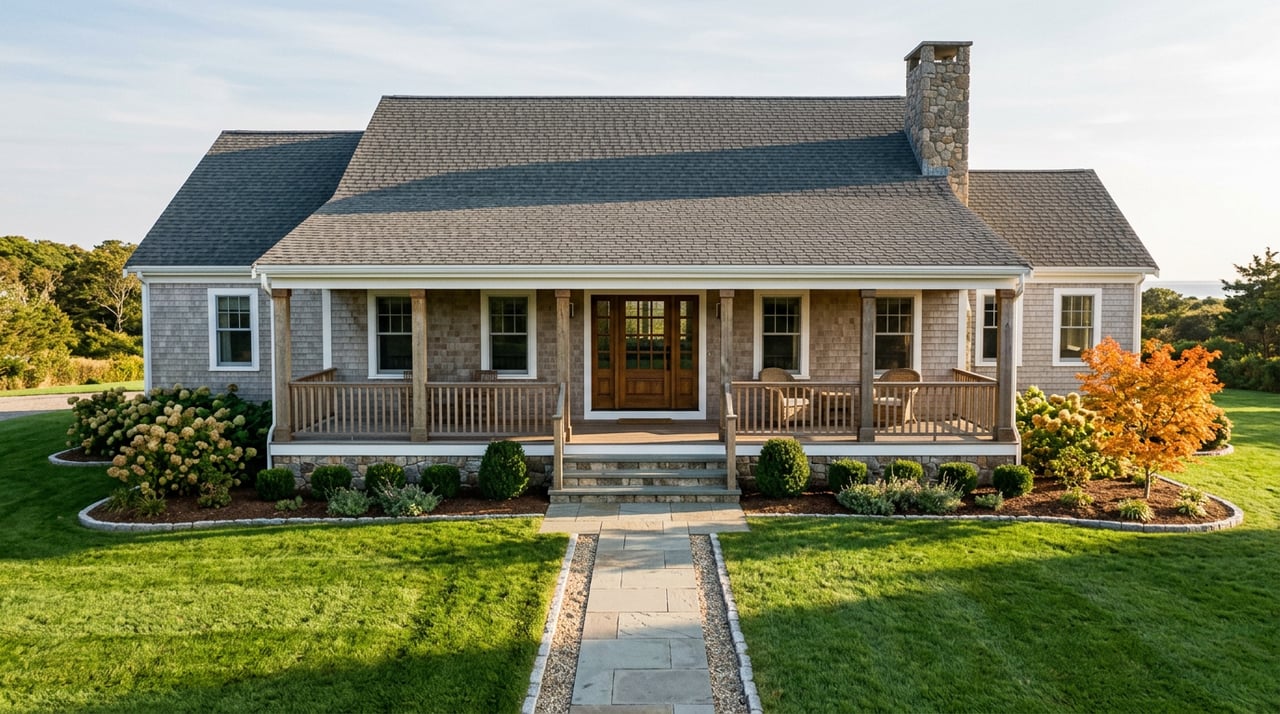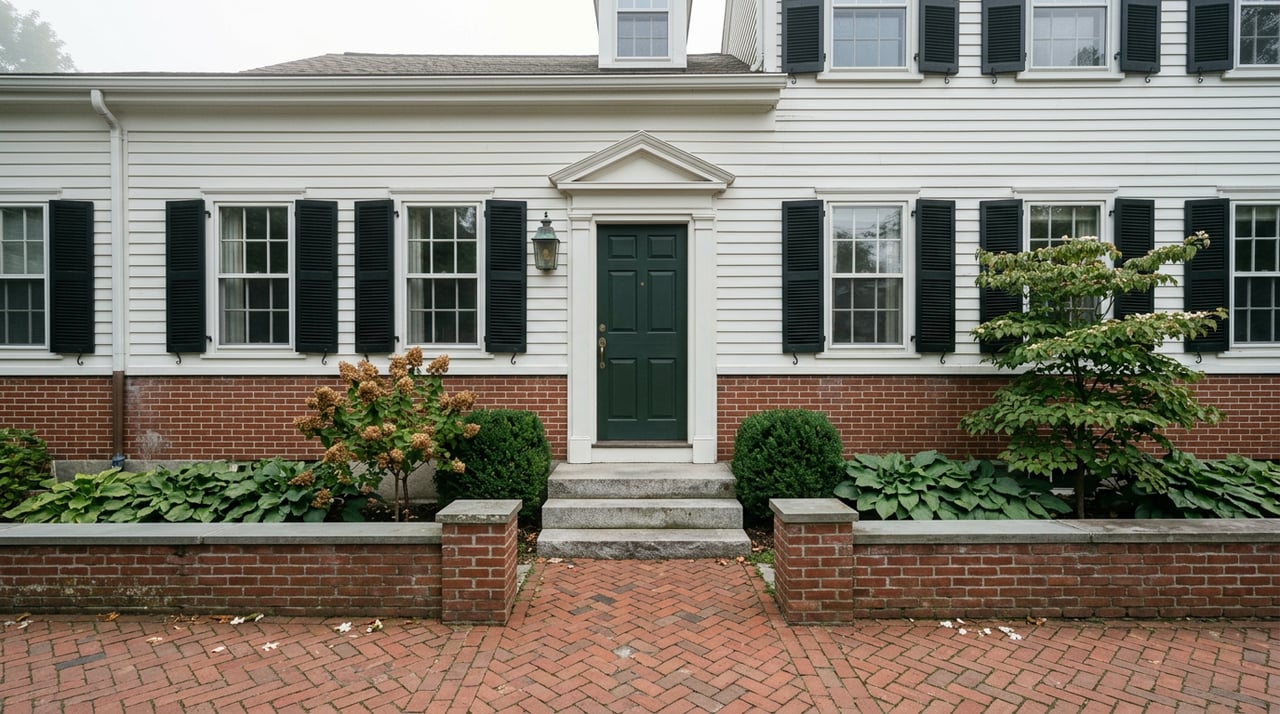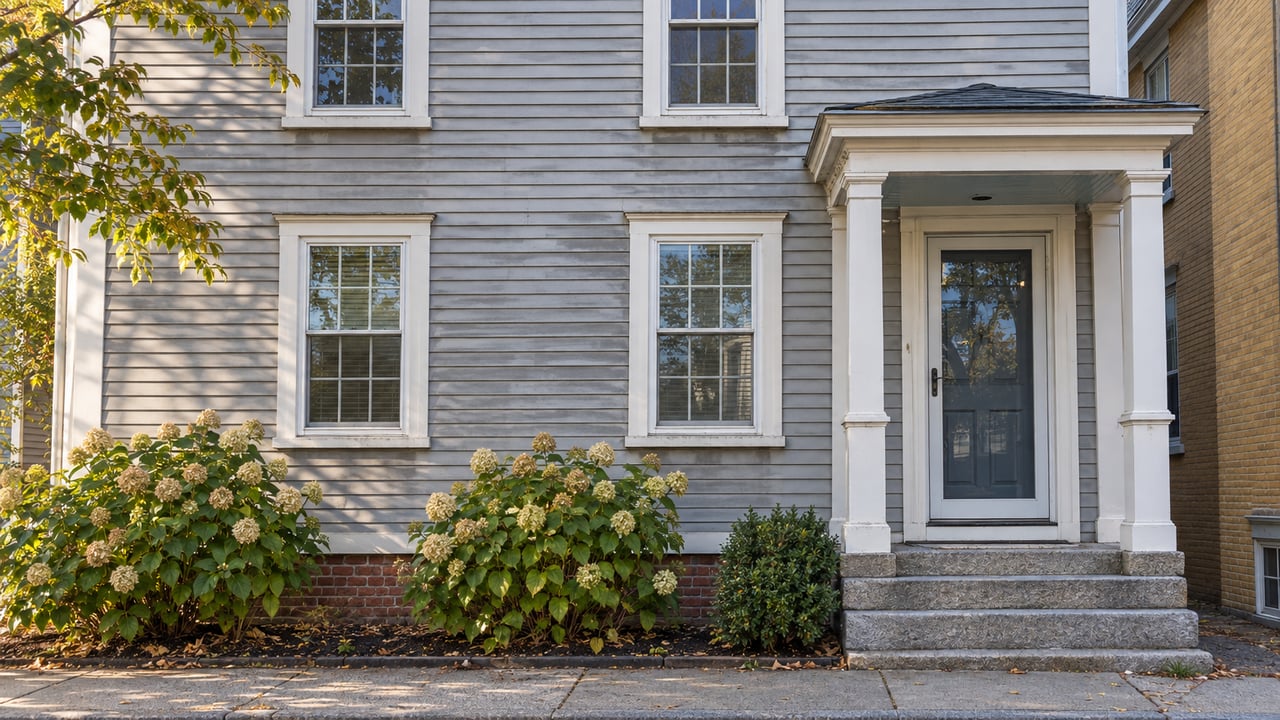
"Six single-family houses converted within the last several years to student housing with 10 to 12 students."
That's what Dexter Strong, who lives on College Hill, told Providence's City Plan Commission this past July. He wasn't complaining about noise for its own sake. He was describing, house by house, how the neighborhood's housing stock has quietly split into two different products that get bought, sold, and priced by two different sets of rules.
If you're comparing College Hill to other neighborhoods right now, the split matters more than any single number a portal hands you. Pull up three different sources and you'll get three different stories about which direction this market is even moving. That's not noise in the data. It's the shape of the neighborhood showing through.
Four Numbers That Don't Agree
Look at what closed and listed in College Hill over the past year and the disagreement is immediate.
| Source | What it measures | Time window | Figure | Direction vs. prior year |
|---|---|---|---|---|
| Redfin | Median sale price | February 2026 | $940,000 | Up 23.7% |
| Trailing 12-month sold comps | Median sale price | Most recent 12 months tracked | $892,500 | Down 6% |
| Portal list-price index | Median list price / price per sq ft | March 2026 | $1.52 million list / $439 per sq ft | List price up, price per sq ft down roughly 13 to 14% |
Redfin's February snapshot has College Hill sale prices climbing sharply, with homes taking 47 days to sell that year, up from 44 days the February before, on a small sample of 12 closings. A separate trailing twelve-month sold comp pull, drawing from a wider window of closings, puts the median six percent lower than the year before it. By March, list prices had jumped past $1.5 million even as the price paid per square foot fell.
None of these sources made an error. They're each looking at a different slice of the same neighborhood, and College Hill's slices don't behave the same way.
What's Actually Selling At the Top
The single-family sales driving the higher numbers are not typical inventory. They're a small run of historic homes that happen to be trading right now.
A Greek Revival at 6 Olive Street sold for $2.2 million this year, the highest single-family sale in the neighborhood so far in 2026, according to Rhode Island Statewide MLS records. Built in 1850, the house has eight bedrooms and more than 6,000 square feet across multiple levels on a lot just over 9,000 square feet, a short walk to Brown and RISD. In late September, another historic College Hill property closed at $3.4 million, a sale that outpaced its own 2026 city assessment of roughly $2.9 million by a wide margin.
Multi-family sales tell a related but distinct story. A two-family at 5 to 7 Cushing Street, built in 1848 and combining a seven-room main residence with an attached six-room townhouse apartment, sold for nearly $1.83 million this year, the second-highest multi-family sale recorded in Providence County so far in 2026. That single sale alone can move a neighborhood-wide multi-family median more than a dozen ordinary transactions would.
A handful of these sales, concentrated among the neighborhood's largest and most architecturally significant homes, is enough to pull the top-line median well above what the bulk of College Hill's smaller multi-family and student-occupied properties are actually doing. The homes making headlines and the homes changing hands most often are not competing in the same price tier, and any median that blends them is describing a neighborhood that doesn't quite exist.
The Overlay Conversation Has Already Named College Hill
The other half of what's pricing College Hill right now isn't a sale at all. It's a zoning conversation that started somewhere else and is already being pointed at this neighborhood.
In March 2026, Councilwoman Shelley Peterson introduced an amendment to Providence's zoning ordinance establishing Student Housing Overlay Districts, designed to allow higher-density off-campus student housing in designated zones around colleges while setting a review process meant to protect neighborhoods from overconcentration. The ordinance went to the council's HOPE Committee, and the city held community meetings that spring and summer focused on the area surrounding Providence College.
By the City Plan Commission's July 28 meeting, though, the conversation widened. Deputy Director of Planning Bob Azar told commissioners the Providence College overlay was meant as a pilot, not a boundary. Asked whether the same approach could reach College Hill, he said it wasn't only Providence College students filling these houses, noting the city already has some places with high concentrations of students. Ward 2 Councilor Jill Davidson, whose district covers parts of College Hill, Blackstone, and Wayland, testified in support, telling commissioners her ward faces its own version of the same pressure from Brown-affiliated renters, even if the scale differs from what's happening near Providence College. That's the meeting where Strong gave his account of six converted houses. The commission voted to send the overlay ordinance to the full City Council for a vote, which has not yet happened as of late September 2026.
Nothing here rezones College Hill today. But the pilot has an explicit exit ramp into this neighborhood, named in testimony by the city's own planning staff and by the councilor who represents part of it.
The Fee Fight Nobody Voted On Yet
A separate proposal moved on a parallel track and already put College Hill's investor landlords on the record.
In June 2025, Peterson and then-councilman John Goncalves introduced a $300-per-student annual fee on landlords renting exclusively to college students, with fines up to $500 a day for noncompliance. Goncalves withdrew as a sponsor before the fee reached a public hearing that November, and the hearing itself drew heavy opposition from residents, landlords, and students. College Hill landlord David Baskin told the committee the fee, layered on top of rising property taxes, would push him and other small investors out of the city. "You're pushing me out," he said. Nina Markov, president of the College Hill Neighborhood Association, testified alongside Strong in support of the fee. Shannon Russell, an operations manager for a large off-campus student housing company with more than 100 properties concentrated in the Providence College area, argued the fee mischaracterized landlords who already pay substantial city taxes. Mayor Brett Smiley opposed the ordinance as drafted, citing enforcement problems tied to student privacy law. No vote followed the hearing, and none has been scheduled since.
The fee stalled. The appetite for it, and the specific naming of College Hill landlords in that debate, did not go away with it.
The Other Side of the Ledger
None of this cuts only one direction for an investor. Rhode Island's 2024 accessory dwelling unit law requires Providence to allow ADUs by right on owner-occupied single-family lots, up to 1,000 square feet, with ministerial permit review and no parking requirement within a half mile of transit, which covers most of College Hill's dense bus network. At the same time College Hill's status as a National Historic Landmark district means any exterior change to a contributing structure needs a Certificate of Appropriateness from the city's Historic District Commission before a building permit can move forward, which lengthens timelines on conversion projects even when the zoning itself cooperates.
Read together, the regulatory picture is not a single tightening or a single opening. It's a set of levers moving in different directions on the same block, which is exactly why a generic median can't tell you what a specific property is worth to hold.
Before You Underwrite a College Hill Multi-Family
A few things worth confirming before a number on a listing sheet becomes an offer:
- Whether the property's current occupancy already complies with Providence's existing student-per-unit limits, since a legally converted rental carries different risk than one operating ahead of the rules
- Whether the address sits inside the College Hill Historic District, which triggers Historic District Commission review for any exterior work tied to a renovation or conversion
- Whether the seller's asking price is anchored to a recent large single-family or historic sale that may not reflect what comparable multi-family stock is actually trading for
- Whether an ADU addition pencils out under the 2024 state law as a way to add legal income without waiting on the overlay debate to resolve
FAQ
Has Providence's Student Housing Overlay District taken effect on College Hill? No. As of late September 2026 the ordinance has been sent from the City Plan Commission to the full City Council for a vote, and the pilot boundary currently covers the area around Providence College. Planning staff have said publicly that College Hill is a candidate for a future version of the same overlay, not that one is in place.
Is the $300 student impact fee currently being charged? No. The fee reached a public hearing in November 2025 and drew strong opposition, including from the mayor. No vote has followed, and no fee is currently in effect.
Does the historic district add real time to a renovation? Any exterior change to a contributing structure on College Hill needs sign-off from the city's Historic District Commission before standard permits can be issued. Interior work does not require that review, which is often the more practical route for early-stage rental conversions.
College Hill rewards buyers who read past the headline number, and right now the headline number is being written by two very different markets at once. If you're weighing a single-family purchase against a multi-family conversion here, or trying to figure out what a specific address is actually worth to hold through a zoning conversation that hasn't finished, Rob Cunningham has spent enough time on both sides of College Hill's investment math to walk through the specific numbers with you.